⚡ FIRST Lego League 2025–2026 Season
FLL Robotics Team #62536
DINO NUGGETS
Dig Deep. Discover Everything.
Scroll
Dig Deep. Discover Everything.
Traditional excavation methods require physically digging into the earth — permanently destroying the context of artifacts and often damaging the artifacts themselves before they're even found.
Our rover uses LIDAR to scan underground — but a LIDAR scan alone just shows shapes. It can't tell if a circle is a rare artifact or just a rock. That's where AI comes in.
TAP THE RED DOTS TO EXPLORE EACH SYSTEM
TAP ANY RED DOT
TO INSPECT A COMPONENT
360° ground-penetrating LIDAR maps subsurface artifacts up to 3 meters deep. The rotating emitter fires 150,000 laser pulses per second, building a precise 3D point-cloud map of underground voids and buried objects.
Identifies material composition — ceramic, metal, bone, wood — without any physical contact. 8-band spectral analysis spanning infrared to ultraviolet differentiates artifact materials with 94% accuracy.
Lightweight yet durable aerospace-grade carbon fiber composite frame handles rough terrain at dig sites. The angular design provides maximum structural rigidity while keeping weight at a minimum for long-range deployment.
All-terrain wheels navigate sand, mud, loose gravel, and rocky excavation sites. Independent active suspension on each wheel maintains scanner stability even on uneven ground up to 30° inclines.
Real-time artifact data and 3D maps are transmitted directly to the archaeologist's tablet. Wi-Fi 6 uplink streams full scan data at 1 Gbps up to 500m range — even in deep excavation sites with limited signal.
Retractable precision drill for targeted subsurface soil sampling. A stepper motor extends the probe up to 50cm depth to collect narrow soil cores directly beside detected artifacts — without disturbing the find itself.
Onboard AI classifier analyzes LIDAR scan data in real-time. Determines if detected objects are artifacts worth excavating or just rocks and debris. Filters false positives by cross-referencing depth, density, and shape signatures — so the rover never wastes time on a rock.
AI determines if the object is worth digging up by analyzing: depth of burial, likely material composition, and probability of archaeological significance. Prevents wasted excavation on trash or natural rock formations — and gives archaeologists a confidence score for every detected object.
Watch the scan waves penetrate 3 layers of earth and reveal a buried artifact
In the FLL Robot Game, we program our SPIKE Prime robot to autonomously complete missions on the UNEARTHED game board. Each mission simulates real-world underground challenges — from mining to archaeology to infrastructure. Our team designs custom attachments that snap onto the robot for each mission.
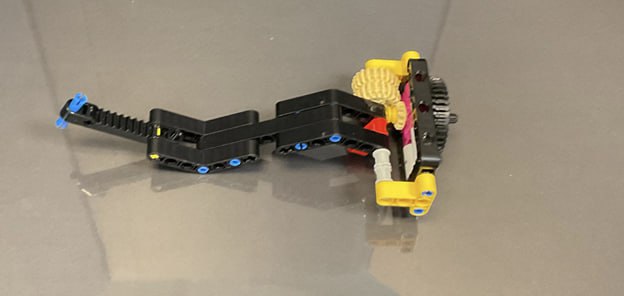
Connects to the front of the robot using a 3-long blue peg. This is the core multi-purpose attachment — it hooks and pulls virtually any object on the game board, serving as the mount for other attachments too.
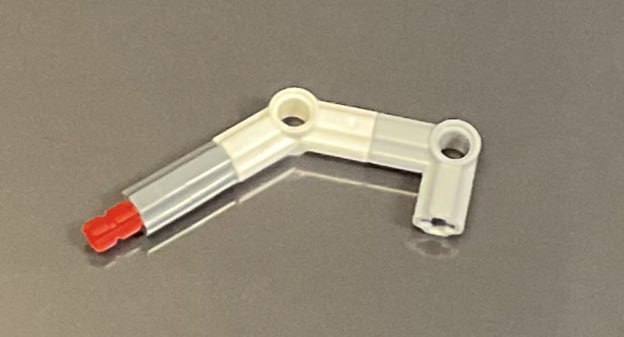
A simple hook that connects directly onto the Main Hook Arm. Designed to hook a ring and pull out the Heavy Lifting mission components. Quick-attach design allows for fast swaps between runs.
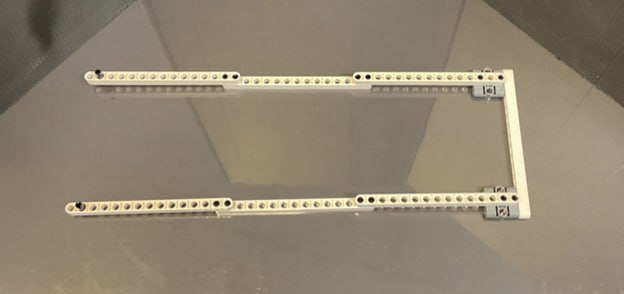
Two arms extend outward, connected by a pole/crosspiece at the end. Used for the Soil Brushing challenge — a simple forward-and-back motion completes the task fast. Clean design, maximum efficiency.
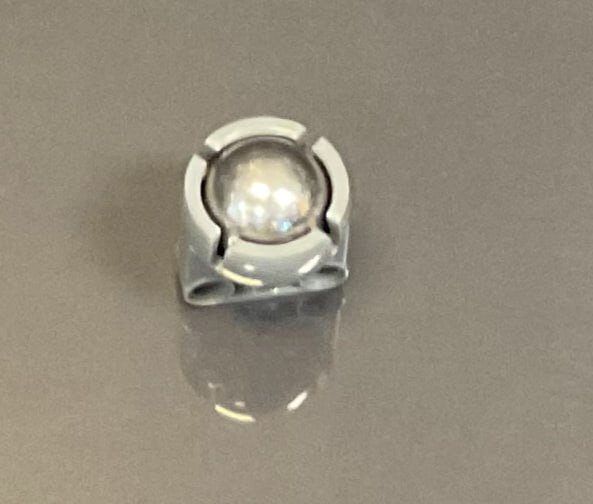
Connects to the Main Hook Arm at the blue peg end. A weighted attachment that adds force for hitting the Silo lever up and down. Gravity-assisted design delivers maximum impact with minimal complexity.
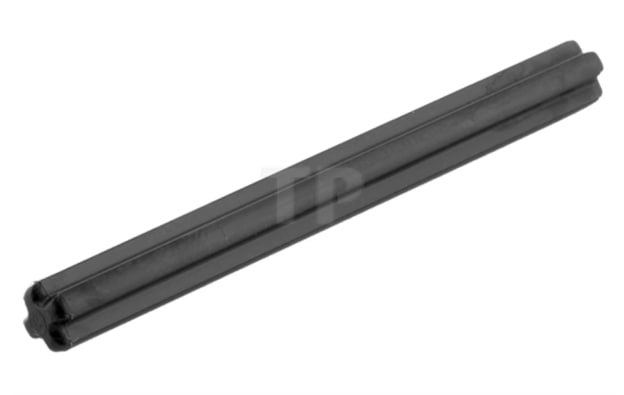
An axle that connects to the Main Hook Arm. Used for the Mine Cart mission to lift the lever up with precision. A targeted lift mechanism that gets the job done in one smooth pass.

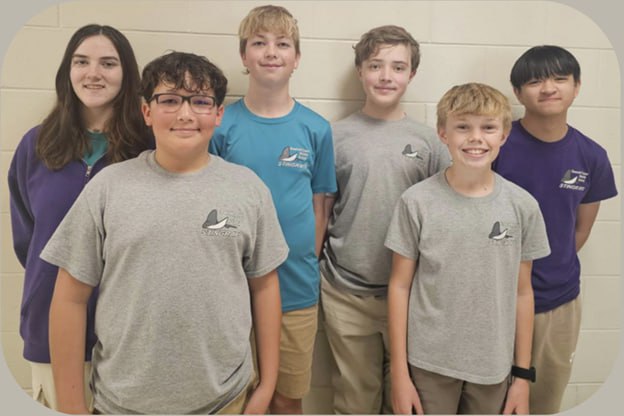
Leads the team with calm under pressure and writes the SPIKE Prime's core mission programs and autonomous routines.

The creative force behind every attachment and mechanism — engineers solutions that are elegant, fast to swap, and competition-ready.

Turns designs into reality and stress-tests every attachment relentlessly. If it can fail at competition, Eli finds out first.

The team's chess master — maps every mission route, calculates optimal scoring sequences, and always has a Plan B and Plan C ready.
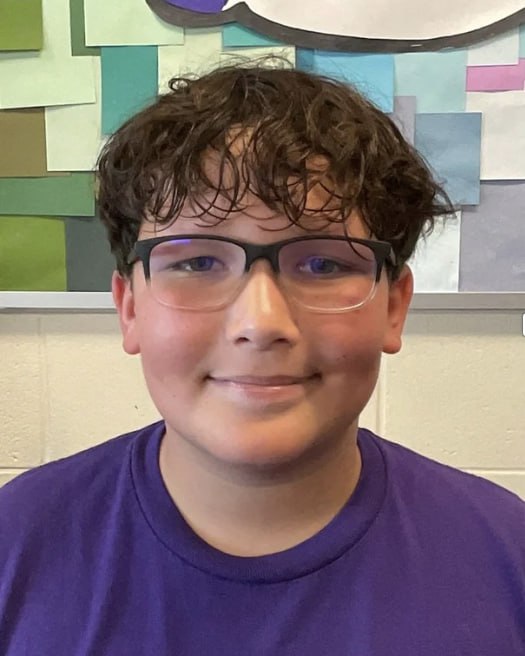
Leads the Innovation Project research and keeps every experiment, design decision, and meeting documented for judging panels.

Brings the Innovation Project to life on stage — crafts the story, drives community outreach, and makes the judges remember Dino Nuggets.